
Electric Motors without Brakes
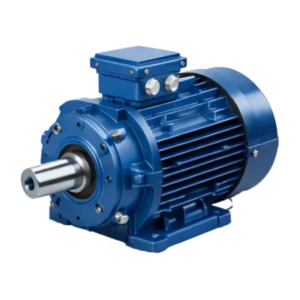
Standard industrial motors without brakes consist of the fundamental motor components without any additional braking mechanism. They rely on external means for stopping or use natural deceleration when power is removed.
Standard industrial electric motors convert electrical energy into rotational mechanical energy through electromagnetic principles. When AC power is applied to the stator windings, it creates a rotating magnetic field that induces current in the rotor, producing torque. These motors provide continuous, unidirectional or reversible rotation without any built-in stopping mechanism.
- Simpler construction with fewer components
- Lower initial cost compared to braked versions
- Higher continuous duty rating (no brake heat to dissipate)
- Lighter weight and more compact design
- Better ventilation and heat dissipation
Complete Guide to Electric Motors (Without Brakes)
Electric motors convert electrical energy into rotational motion. Motors equipped with a brake include a braking system for quick stopping and precise position control, making them suitable for applications requiring safe and accurate halting—such as cranes, elevators, and automated machinery. Motors without brakes are used in continuous-duty applications where immediate braking is not needed, such as fans, pumps, and conveyors.
Request a Quote
Ready to Work Together? Build a project with us!
Learn More From
Frequently Asked Questions
Lorem ipsum dolor sit amet, consectetur adipiscing elit. Ut elit tellus, luctus nec ullamcorper mattis, pulvinar dapibus leo.
Lorem ipsum dolor sit amet, consectetur adipiscing elit. Ut elit tellus, luctus nec ullamcorper mattis, pulvinar dapibus leo.
Lorem ipsum dolor sit amet, consectetur adipiscing elit. Ut elit tellus, luctus nec ullamcorper mattis, pulvinar dapibus leo.